4 Aftercare Tips for Implant Crowns
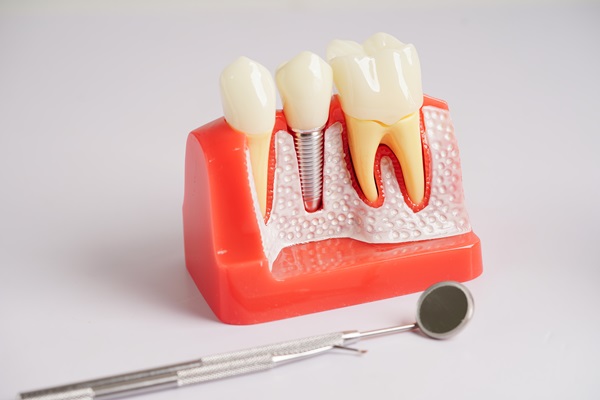
Implant crowns are a long-term solution to tooth loss that are easy to care for, but the process of receiving the new and beautiful replacement teeth is not always pleasant. To make the aftercare process following the placement procedure go as smoothly as possible, it is helpful to learn some aftercare tips from a dental professional.
4 Ways to care for your new implant crowns
Properly caring for implants after placement is essential to minimizing the risk of oral infection and keeping any discomfort that exists at a tolerable level until a full recovery is made. The following are four effective tips on how to care for your oral health after the placement of the implants.
1. Keep your mouth clean
Perhaps the most important care tip following implant crown placement is to keep the mouth as clean as possible. There is likely to be a fair amount of swelling and discomfort that exists, and there may even be some minor bleeding as well. Patients can keep the discomfort from becoming intolerable and prevent oral health complications such as an infection from developing by keeping the mouth clean through a good daily oral care routine. The routine should include brushing several times a day and using mouthwash as directed by the dental professional.
2. Eat a soft diet and drink water
One of the biggest changes to prepare for after implant placement is the patient’s diet. Many foods will be off-limits for the first few weeks, and it is important to keep chewing at a minimal level. To do so, stick primarily to soft foods such as oatmeal, yogurt, scrambled eggs and soup. It is also helpful to drink water throughout each day to wash away any excess bacteria that develop in the mouth.
3. Check for complications
It is also important to check for any signs of complications during the recovery process and to notify your dental professional if any issues develop to ensure the problem does not worsen or linger for longer than what is necessary. Signs to check for include excessive swelling, moderate to severe bleeding, an intolerable amount of pain and a dental implant that feels loose. While moderate discomfort and other symptoms are to be expected, anything severe might be a sign of a more serious issue such as an implant failure or an oral infection.
4. Make all scheduled dental visits
Your dental professional overseeing the implant crowns treatment process is likely to schedule follow-up visits to ensure the recovery process goes smoothly and that there are not any complications that the patient could not detect. It is essential to make all scheduled visits as some might be necessary for a full and speedy recovery. The longer an issue exists, the more serious it is likely to become, and dental professionals can quickly spot and fix any issues.
Find out more about implant crowns
Get in touch with our office today to learn more about implant crown treatment and to schedule an initial consultation visit. We help our patients through the entire process, including the aftercare process following implant placement.
Are you considering implant crowns in the Bellevue area? Get more information at https://www.adendentalbellevue.com or call us at (425) 620-2327.
Check out what others are saying about our dental services on Yelp: Implant Dentist in Bellevue, WA.
Related Posts
With all the information circulating about sugar, you may wonder if avoiding sweet treats entirely benefits your oral health. As any general dentistry office will likely tell you, cutting sugar from your diet can have a significant positive impact on your teeth and gums.Your mouth is full of bacteria. This is not an entirely negative…
If you have cracked, chipped, worn, or otherwise damaged teeth, chances are they are not beyond hope. Several general dentistry procedures exist to improve the appearance of your smile and strengthen your teeth and improve their function. Your dentist can explore all the options available to you and how each can benefit your smile.In the…
Fixing a tooth with a crown is a common general dentistry procedure. If a tooth is damaged and a filling cannot fix the problem, or if a tooth is misshapen, putting on a crown may be the solution.There are several reasons your dentist may recommend a crown. Some of them include:Covering a tooth after a…
General dentistry is a practice similar to primary care. Patients see their general dentists on a regular basis for various treatments, including preventative care, diagnostics, fillings, and routine cleanings. Undergoing routine care with a general dentist offers various benefits to the patient.The health of your teeth and gums depends on your oral hygiene and routine…